
.png)
.png)

Imagine feeling like a heavy fog has settled over your days, making even simple joys feel distant. For many, antidepressants offer a gentle hand to lift that fog, restoring clarity and energy. These medications, often misunderstood, play a vital role in mental health care by treating depression, anxiety, and more. In this comprehensive guide, we break down everything about antidepressants—from when they're prescribed to how they work in the brain—with warmth and clarity to ease your concerns.
Antidepressants aren't a quick fix or a sign of weakness; they're science-backed tools that help millions feel more like themselves. This article equips you with patient-friendly insights, real-life examples, and practical advice. Let's explore together.
What Are Antidepressants?
Antidepressants are a class of medications designed to relieve symptoms of mental health conditions by balancing brain chemicals. They primarily target depression but extend to anxiety, PTSD, obsessive-compulsive disorder (OCD), and even chronic pain or sleep issues.
Unlike painkillers that act instantly, antidepressants work gradually to support long-term emotional balance. Think of them as gardeners tending to your brain's neural pathways, fostering healthier growth over time.
Beyond Depression: Common Uses
Depression involves persistent low mood, fatigue, and loss of interest in activities, far beyond temporary sadness. Antidepressants ease these by improving mood regulation and energy levels.
Providers also prescribe them off-label for migraines, insomnia, or fibromyalgia, where they help both mood and physical symptoms. For instance, someone with chronic back pain might find relief in certain types that target dual pain and low mood.
Part of a Bigger Picture
No antidepressant stands alone—pairing them with therapy, exercise, or mindfulness amplifies results. A patient named Alex shared how combining medication with weekly therapy sessions helped him rebuild motivation after months of isolation.
This holistic approach ensures antidepressants support your full wellness journey, not just symptoms.
When Are Antidepressants Prescribed?
Prescribing antidepressants is a thoughtful decision, guided by symptom severity and life impact. They're typically recommended when daily functioning suffers, like struggling at work or with relationships.
Guidelines from bodies like the FDA emphasize starting with moderate to severe cases where other steps fall short. Warmly put, it's about giving your brain the support it needs to heal.
Core Reasons for Starting Antidepressants
For moderate to severe depression, antidepressants shine when sadness lingers, energy plummets, or hopelessness creeps in. They help restore appetite, sleep, and focus disrupted by the condition.
Anxiety disorders and OCD often qualify, too, especially if worries paralyze decision-making. Picture Maria, whose constant panic attacks eased after starting medication, allowing therapy to take root.
Recurrent depression—episodes returning despite past recovery—prompts renewed use, preventing deeper cycles.
When Therapy Alone Isn't Enough
Lifestyle tweaks like better sleep or diet help mild cases, but antidepressants step in for persistent distress. If low energy blocks therapy attendance, medication creates a stable base.
Severe symptoms, including suicidal thoughts, demand urgent intervention to make other treatments viable. Providers assess holistically, ensuring safety first.
Signs It's Time to Discuss with Your Doctor
- Symptoms lasting over two weeks without improvement.
- Interference with work, parenting, or hobbies.
- Physical tolls like unexplained aches or appetite changes.
Special Situations and Populations
Chronic pain conditions like neuropathic pain benefit from antidepressants' dual action on nerves and mood. Older adults or those with heart issues get tailored options to minimize risks.
In teens, use is cautious due to monitoring needs, but effective for severe cases. Pregnancy planning involves weighing benefits against risks with expert guidance.
How Do Antidepressants Work in the Brain?
Antidepressants influence neurotransmitters—serotonin, norepinephrine, dopamine—that relay mood signals between brain cells. They prevent reabsorption (reuptake), keeping these chemicals active longer.
This boosts communication in mood-regulating brain areas, like a traffic jam clearing for smoother flow. Over time, it promotes neuroplasticity, rewiring connections for lasting resilience.
Neurotransmitters: The Mood Messengers
Serotonin stabilizes mood and sleep; low levels link to anxiety. Norepinephrine fuels alertness; dopamine sparks motivation. Antidepressants fine-tune these for balance.
Consider it like adjusting radio dials—too low, and static dominates; just right, and clear signals emerge.
Short-Term Changes vs. Long-Term Healing
Initial effects hit fast: better sleep or appetite in days. Full mood lift takes 4-8 weeks as receptors adapt and new neural paths form.
Patience pays off—many report subtle shifts first, like enjoying a walk again, building to profound clarity.
The Role of Neuroplasticity
Your brain isn't fixed; antidepressants encourage growth of new connections, enhancing resilience against stress. Studies show structural changes after months of use.
Main Types of Antidepressants
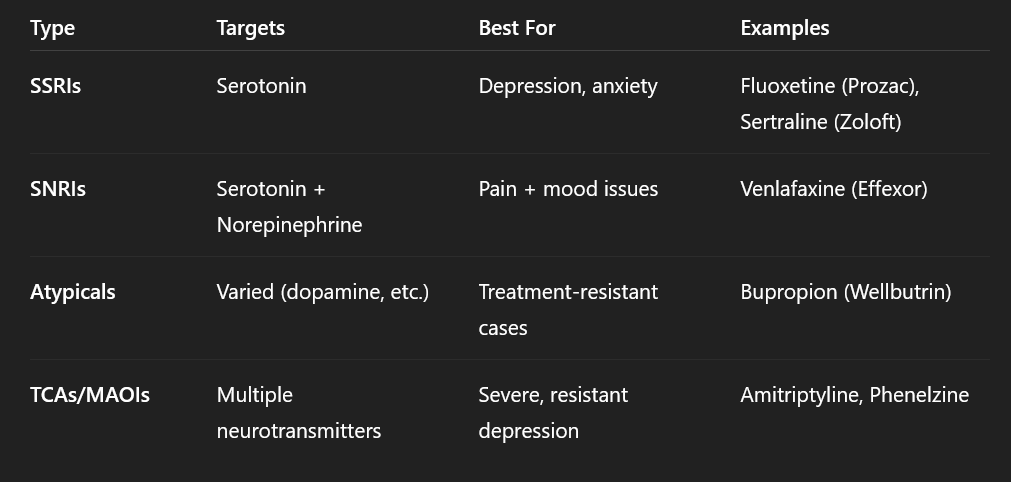
Several classes exist, each targeting neurotransmitters uniquely. Selection depends on symptoms, side effects, and health history.
SSRIs lead as first-line due to tolerability; others follow if needed. Here's a quick guide:
SSRIs: The Gentle First Choice
SSRIs block serotonin reuptake, increasing its availability. Safer with fewer interactions, they're ideal starters.
Side effects like mild nausea often fade; take with food to ease stomach upset.
SNRIs and Beyond for Tailored Relief
SNRIs tackle fatigue-heavy depression or pain. Atypicals suit smokers or those needing focus boosts.
Older classes pack power but require diet vigilance (MAOIs avoid tyramine-rich foods).
Starting Antidepressants: What to Expect
Your provider starts with a full history review—symptoms, meds, lifestyle—to match the best fit. Openness builds trust.
Doses begin low, ramping up biweekly for tolerance.
The Prescribing Conversation
Discuss goals: "Do side effects like drowsiness matter most?" Family response history guides choices.
Expect questions on pregnancy, bipolar risk, or bleeding tendencies.
Finding Your Match
Trial and error is normal—50% respond to the first; switches refine results. Patience with check-ins ensures success.
Dosing Timeline and Patience
Week 1-2: Possible adjustment side effects. Month 1-2: Emerging benefits. Six months minimum post-improvement.
Track moods in a journal; share at visits.
Common Side Effects and Safety
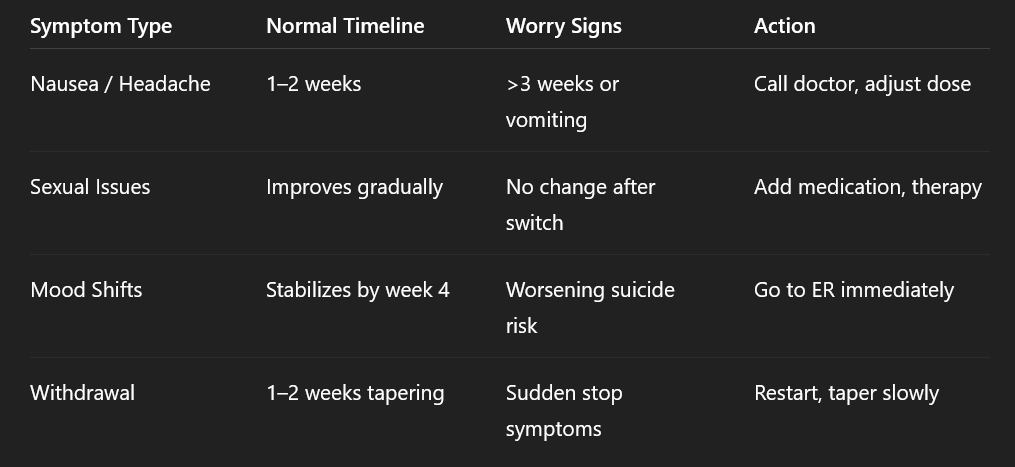
Most effects are mild, transient—like a new routine's adjustment pains. Communicate early for tweaks.
Everyday Side Effects and Coping
Nausea, dry mouth, sleep shifts, or sexual changes affect many initially. Hydrate, time doses wisely (bedtime for sedating ones).
Weight flux? Pair with walks. 70% see improvement in weeks.
Sexual Side Effects: Open Talks Matter
Common but manageable—dose tweaks or add-ons like bupropion help. Normalize discussing; providers have solutions.
Serious Warnings to Heed
Black-box alert: Youth under 25 risk initial suicidal upticks—monitor closely first month.
Serotonin syndrome (rare): Fever, confusion—seek ER. Interactions with NSAIDs amplify bleeding.
Myths, Fears, and Real Talk About Antidepressants
Let's address the whispers of doubt head-on with gentle truths grounded in science and real experiences. Antidepressants often carry stigma, but understanding dispels fear, inviting hope instead.
Myth 1: "They Numb Emotions or Turn You into a Zombie"
Truth: Antidepressants lift the heavy lows of depression, restoring your full emotional range—not flattening it. Many feel "steadier," with joy returning alongside calm. Emotional blunting affects some (about 20%), often due to dose tweaks or switches resolving it. Think of it as tuning a radio from static to clear music, not muting the sound.
Myth 2: "They're Addictive, and You'll Be Stuck Forever"
Not addictive—no craving or withdrawal like substances. Abrupt stops risk discontinuation symptoms (dizziness, flu-like feelings), so taper slowly over weeks. Six-plus months post-recovery prevents relapse, as depression often recurs without maintenance. Like crutches healing a sprain, they're a temporary support for brain rewiring.
Myth 3: "Needing Them Means You're Weak"
Far from it—like glasses for vision or insulin for diabetes, antidepressants are smart self-care for chemical imbalances. They empower engagement in life, therapy, and growth. Sarah shared, "Meds gave me energy to face my trauma; now I'm thriving."
Addressing Dependency Fears
Benefits arise from neuroplasticity—new brain connections—not habit. Long-term use suits chronic cases, but many taper successfully with monitoring. Open talks with providers ease worries.
Embrace them as allies on your path to wholeness.
Coming Off Antidepressants Safely
Taper over weeks/months under guidance to dodge flu-like discontinuation symptoms.
Monitor for relapse; therapy sustains gains.
Step-by-Step Tapering Guide
- Halve the dose every 2-4 weeks.
- Watch for dizziness and anxiety.
- Reassess annually if stable.
Integrating Antidepressants in a Broader Healing Plan
Blend with CBT therapy for root causes, exercise for endorphins, and support networks for warmth.
Ready for expert, online psychiatry with certified prescriptions? Book a warm consultation at Rocket Health today—your path to balance starts here.
(Educational only; consult professionals for personalized advice.)

.jpg)
.jpg)
.jpg)