
.png)
.png)
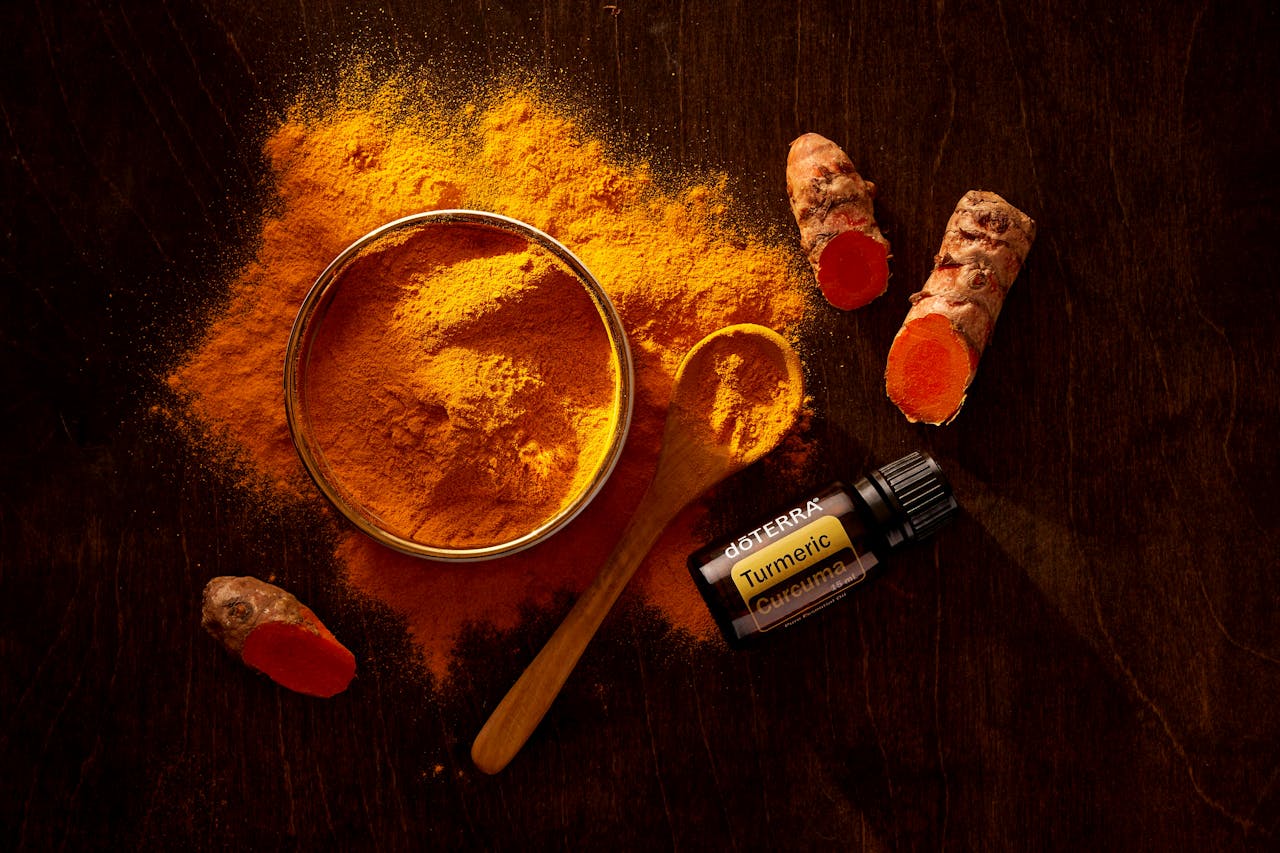
Natural alternatives to psychiatric medications are gaining traction as science uncovers their potential for managing depression, anxiety, and related conditions. Backed by clinical reviews from sources like the NIH and Mayo Clinic, these options—herbs, nutrition, and lifestyle shifts—offer viable support, especially for mild cases or as complements to therapy.
This article delves into what actually works, drawing on systematic reviews and trials to separate hype from evidence.
Disclaimer: This is an eductional article. Natural alternatives can interact with medications or worsen symptoms. Always consult a psychiatrist or healthcare professional before making changes, especially if currently on psychiatric drugs or managing severe conditions.
Why Consider Natural Alternatives?
Psychiatric medications like SSRIs, benzodiazepines, and antipsychotics help millions but often come with trade-offs. Common side effects include sexual dysfunction (up to 70% with SSRIs), weight gain, and dependency risks—prompting 15-20% of users to discontinue within months.
In recent years, up to 45% of people on psychiatric medications also use herbal remedies, reflecting a strong preference for complementary approaches amid wellness trends and access to affordable options.
Key advantages include:
- Lower dependency: Unlike benzos, most herbs lack addiction potential.
- Holistic synergy: They pair well with therapy, enhancing outcomes by 20-30% in trials.
- Cost-effectiveness: Monthly expenses drop from ₹500-2000 for meds to ₹200-800 for herbs or foods.
A meta-analysis confirms modest efficacy rivaling low-dose antidepressants for mild-moderate depression.
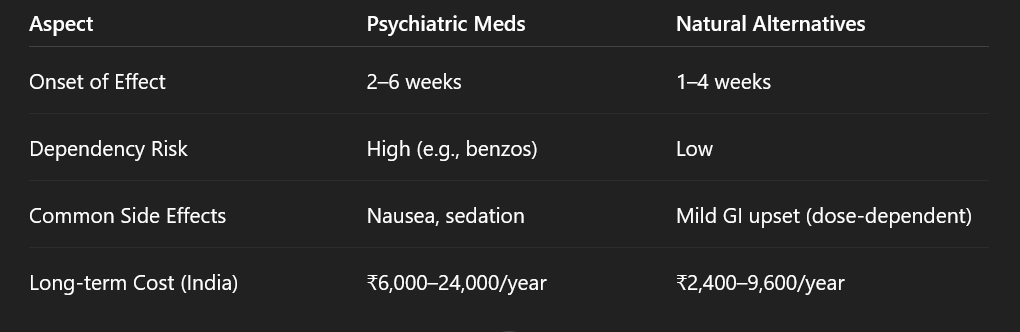
These factors make naturals appealing, particularly in regions like Southeast Asia where fresh herbs thrive in local markets.
Top Herbal Remedies
Herbal options top the evidence list, with NIH reviews highlighting five standouts for depression and anxiety.
St. John’s Wort excels for mild-moderate depression. Meta-analyses of 27 trials show response rates comparable to SSRIs like fluoxetine (RR ~1.0), via serotonin reuptake inhibition. Dose: 300mg standardized extract 3x/day for 4-6 weeks—but CYP3A4 induction cuts efficacy of birth control, anticoagulants, and psych meds.
Saffron rivals antidepressants. 30mg/day yields Hamilton reductions similar to imipramine/fluoxetine in RCTs (meta g=0.89 vs. placebo); antioxidants target inflammation. Safe for 6-12 weeks per trial.
Omega-3s (EPA/DHA) benefit MDD. 1-2g/day EPA-heavy doses reduce symptoms moderately (SMD 0.38) in 13+ trials, especially with antidepressants.
Rhodiola & SAMe aid fatigue/anhedonia. Rhodiola (400mg/day) eases stress (HAM-D ~5-point drop); SAMe (800-1600mg) boosts ~50% remission as a bipolar adjunct.
Chamomile & Lavender target anxiety. Chamomile (1500mg/day) achieves ~58% response, dropping GAD-7 from moderate-severe to mild; lavender rivals lorazepam short-term.
Evidence Tiers:
- Strong (RCT metas): Saffron, Omega-3s, St. John’s Wort.
- Moderate: Chamomile, SAMe, Rhodiola.
- Emerging: Lavender.
Cautions: Avoid in pregnancy; monitor liver enzymes. In India, ashwagandha (300-600mg) cuts cortisol ~23-30%, per RCTs.
Nutritional & Dietary Interventions
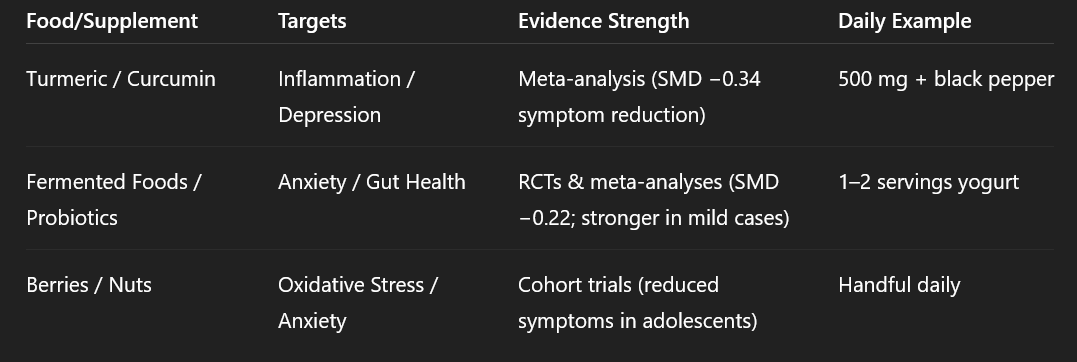
Nutrition acts as a supportive "fourth antidepressant," with meta-analyses linking anti-inflammatory diets to lower depression risk. Pro-inflammatory diets raise odds by 23-40% (OR 1.23-1.41); conversely, Mediterranean-style patterns correlate with 20-30% reduced risk in large cohorts.
- Omega-rich foods like salmon, walnuts, or flaxseeds provide EPA/DHA naturally, sustaining anti-inflammatory effects seen in supplement trials (SMD 0.38 for depression).
- Folate and B12 target deficiencies linked to depression, especially in MTHFR variants (prevalent in 10-30% of populations). Clinical studies show low folate in 20-30% of depressed patients worsens severity and antidepressant response; leafy greens/lentils boost synthesis akin to augmentation strategies.
- Probiotics tap the gut-brain axis. Meta-analyses confirm reductions in anxiety/depression scores (SMD -0.22 overall; up to 40% in specific strains like Lab4P for milder symptoms); try yogurt, kefir, or kimchi.
Ketogenic diets show promise in small pilots for bipolar depression (e.g., mood stabilization in 20/27 completers), mimicking metabolic shifts of mood stabilizers—but evidence remains preliminary.
Lifestyle Changes That Rival Meds
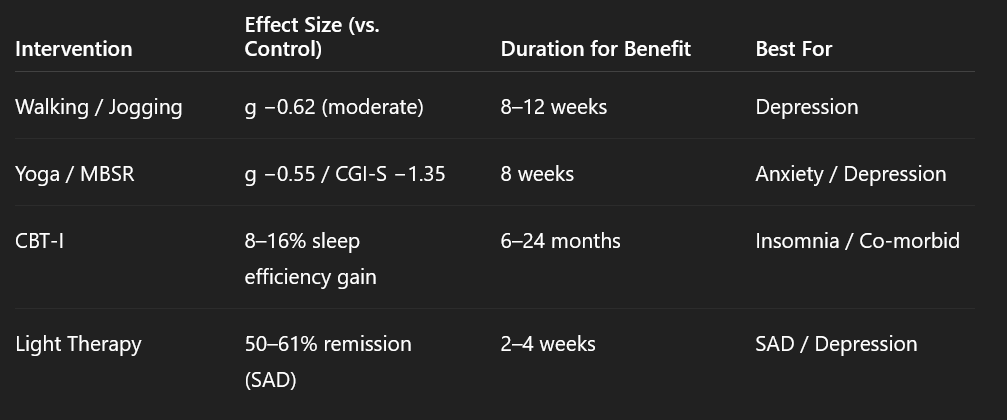
Lifestyle interventions match or exceed antidepressants for mild-moderate depression in network meta-analyses, per RACGP and BMJ reviews.
- Exercise rivals SSRIs. Walking/jogging (150min/week moderate intensity) yields moderate effects (Hedges' g -0.62), comparable to SSRIs (g -0.26) and CBT (g -0.55) vs. controls in 218 RCTs. Yoga/strength training follows closely (g -0.55/-0.49), boosting BDNF and neuroplasticity.
- Mindfulness (MBSR) and Yoga show noninferiority to escitalopram for anxiety. 8-week MBSR reduces CGI-S scores by ~1.35 points (similar to escitalopram's 1.43); yoga matches in depression metas. Use 10-20min apps for busy schedules.
- Sleep Optimization via CBT-I outperforms z-drugs long-term. Meta-evidence shows sustained sleep efficiency gains (8-16%) at 6-24 months vs. drugs' decline; insomnia affects ~50% of depression cases.
- Light Therapy (10,000 lux, 30min morning) achieves 50-61% remission in SAD (SIGH-SAD <50% baseline), with benefits extending to non-seasonal depression in smaller trials.
Integration steps:
- Track mood/exercise via apps like Daylio.
- 10 minutes daily breathwork or yoga.
- Morning walks—ideal for SE Asia urban explorers.
Meta-analyses confirm durability: Lifestyle effects persist 6+ months, often stronger than meds alone.
Revised Risks, Interactions & When to Stick with Meds
Naturals aren't risk-free: St. John’s Wort induces CYP3A4, reducing contraceptive efficacy by 50-70% and interacting with anticoagulants/psych meds.
- High-dose saffron (>1.5g) carries bleeding risks; others may cause GI upset or allergies.
- Severe conditions—psychosis, bipolar mania, suicidality—require meds first-line; naturals as adjuncts only.
- Monitor with bloodwork (e.g., liver enzymes for herbs); taper psych meds gradually over 2-8 weeks.
Ideal candidates: Mild-moderate symptoms, med-intolerant. Red flags: Worsening mood, mania—seek ER immediately.
Conclusion & Next Steps
Science backs saffron, omega-3s, exercise, and diet as effective natural alternatives, often matching meds for milder psychiatric issues.
Pair them with professional guidance for safety. Track progress, adjust, and prioritize therapy.
Ready to explore? Consult a psychiatrist today—start small, stay informed

.jpg)
.jpg)
.jpg)