
.png)
.png)

Psychiatric medication for anxiety helps millions regain control amid rising stress, affecting over 150 million Indians alone. These drugs, from SSRIs to benzodiazepines, target brain chemistry to ease persistent worry, panic, and fear. This guide ranks the most prescribed psychiatric medications, drawing from clinical data and real-world trends to clarify what doctors reach for most often.
Core Classes of Psychiatric Medication
Psychiatric medication for anxiety falls into key classes, each suited to specific needs like long-term relief or acute episodes.
SSRIs: First-Line Gold Standard
Selective serotonin reuptake inhibitors top prescriptions for chronic anxiety. Sertraline and escitalopram lead due to strong evidence in generalized anxiety disorder (GAD) and panic, with 60-70% response rates. They boost serotonin gradually over 4-6 weeks, minimizing dependence.
SNRIs: Power for Comorbid Cases
Serotonin-norepinephrine reuptake inhibitors like venlafaxine and duloxetine handle GAD with pain or depression overlap. Prescribers favor them when SSRIs fall short, offering dual neurotransmitter action for sustained control.
Benzodiazepines: Rapid but Risky
Agents such as alprazolam and clonazepam deliver fast relief in acute panic, acting within minutes. Despite high short-term use, guidelines limit it to 2-4 weeks to avoid tolerance.
Others: Buspirone, Hydroxyzine, Gabapentin
Buspirone serves as a non-sedating GAD add-on, while hydroxyzine aids situational anxiety. Gabapentin surges in off-label volume for anxiety plus insomnia.

Top 10 Most Prescribed Psychiatric Medications
Real-world data highlights these standout psychiatric medications by volume and guidelines.
Sertraline
An SSRI widely prescribed for GAD, panic, and social anxiety, sertraline offers strong efficacy and flexible dosing. It is often a first choice due to its safety profile, broad indications, and suitability for long‑term maintenance with gradual titration and tapering.
Escitalopram
Escitalopram, another SSRI, is favored for GAD and panic disorder because of its clean side‑effect profile and high adherence. It provides steady symptom reduction with once‑daily dosing and minimal drug interactions, making it popular for first‑episode anxiety treatment.
Alprazolam
A short‑acting benzodiazepine, alprazolam, is prescribed for acute panic attacks and severe episodic anxiety. Its rapid onset makes it effective for crisis situations, but dependence and tolerance risks restrict it to brief, carefully monitored courses rather than chronic use.
Venlafaxine
Venlafaxine, an SNRI, treats GAD and panic while simultaneously targeting depression. By boosting both serotonin and norepinephrine, it is especially useful when low mood and physical tension coexist, though clinicians monitor blood pressure and withdrawal with dose changes.
Fluoxetine
Fluoxetine is a long‑acting SSRI used for panic and anxiety linked to OCD or depression. Its extended half‑life smooths missed doses and eases tapering. Clinicians often choose it for younger adults or those at risk of discontinuation symptoms due to its pharmacokinetics.
Clonazepam
Clonazepam is a longer‑acting benzodiazepine commonly used for ongoing panic disorder or severe anticipatory anxiety. Compared with shorter‑acting options, it offers smoother coverage but shares the same dependency and sedation concerns, so guidelines recommend limited, tapered use.
Duloxetine
Duloxetine is an SNRI frequently chosen when anxiety coexists with chronic pain or neuropathy. By influencing both serotonin and norepinephrine, it reduces psychic worry and physical symptoms, though side effects like nausea, dry mouth, and blood pressure increases need monitoring.
Buspirone
Buspirone is a non‑benzodiazepine anxiolytic for GAD that avoids sedation and dependence. It acts on serotonin receptors with a gradual onset over weeks, making it useful as a long‑term option or add‑on to SSRIs/SNRIs when residual worry persists without the risks of benzodiazepines.
Gabapentin
Gabapentin, originally an anticonvulsant, is widely prescribed off‑label for anxiety and insomnia, especially when pain syndromes coexist. Claims data show rising use, but guidelines urge caution because high‑quality anxiety trials are limited, and misuse potential is increasingly recognized.
Hydroxyzine
Hydroxyzine is an antihistamine used for short‑term or situational anxiety when rapid calming without dependence is desired. It causes sedation and dry mouth but lacks addictive potential, making it a common choice for nighttime anxiety or as an alternative to benzodiazepines.
Guidelines vs Real-World Psychiatric Medication Use
Clinical guidelines place SSRIs and SNRIs as first‑line psychiatric medications for long‑term anxiety treatment because they offer strong evidence of benefit with relatively low dependence risk. They specifically highlight drugs like sertraline and escitalopram as starting options, recommending slow titration and routine monitoring, while reserving benzodiazepines only for brief rescue use during severe spikes in anxiety or while waiting for antidepressants to work.
Real‑world practice looks different. Prescription and claims data show benzodiazepines and gabapentin occupying a large share of anxiety‑related scripts, frequently used off‑label for insomnia–anxiety combinations or when patients demand rapid relief. This reflects time pressure in consultations, patient preference for “quick fixes,” and limited access to psychotherapy. In India, online pharmacies are increasingly required to use video consultations and stricter documentation under CDSCO and telemedicine rules, an attempt to expand access while reducing uncontrolled sedative prescribing.
The gap between guidelines and practice ultimately highlights a tension between short‑term symptom relief and long‑term safety. Clinicians are encouraged to prioritize evidence‑based first‑line agents, build in psychotherapy, and use benzodiazepines or off‑label sedating agents sparingly, with clear plans for review and tapering.
Safety, Side Effects & Monitoring Psychiatric Medication
All psychiatric medication carries risks, but most patients manage well. SSRIs spark nausea or sexual issues in 40-70%; SNRIs add blood pressure shifts. Benzodiazepines risk sedation and dependence.
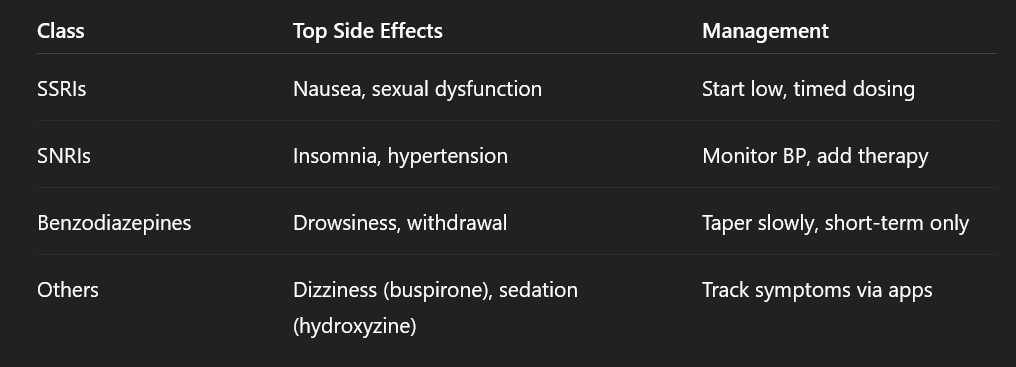
Red flags include early suicidality or serotonin syndrome—seek urgent care. Start low, pair with CBT, and taper under supervision.
Next Steps with Psychiatric Medication
SSRIs lead psychiatric medication prescriptions for a proven balance of efficacy and safety. Consult certified professionals for tailored plans, especially via compliant telepsych platforms offering discreet roadmaps and monitoring. Prioritize therapy alongside for lasting relief.

.jpg)
.jpg)
.jpg)