
.png)
.png)

Heart racing at the thought of booking a psychiatrist appointment online, wondering if you’ll “pick the wrong one” and waste your time or money? Many people feel the same, especially when they are already exhausted by anxiety, low mood, or burnout. The good news is that with a clear checklist and a little preparation, choosing the right expert becomes a structured, calm decision—not a gamble.
What Is a Psychiatrist Appointment Online?
A psychiatrist appointment online is a mental health consultation with a licensed psychiatrist conducted over video (sometimes audio or chat) using secure telehealth platforms or clinic apps. Psychiatrists are medical doctors who can diagnose conditions like depression, anxiety, bipolar disorder, OCD, ADHD, and prescribe medication, order tests if needed, and coordinate therapy or lifestyle interventions.
Telepsychiatry gained momentum after the pandemic, when many countries (including India) introduced formal guidelines to regulate online consultations, e‑prescriptions, and data privacy so that online sessions are held to similar safety and ethical standards as in‑clinic visits. For people living in smaller cities, those with mobility issues, or anyone who feels nervous about walking into a hospital, this format removes travel time, waiting-room awkwardness, and geographical barriers while still providing specialist care.
Why the Right Expert Matters for Psychiatrist Appointment Online
Not every psychiatrist is the right fit for every person, even if they are competent and well-qualified. Choosing someone whose approach, specialization, and communication style align with your needs can make all the difference between feeling dismissed and genuinely understood and supported.
A good match usually means:
- The psychiatrist has experience with your main concerns (for example, panic attacks, trauma, ADHD, postpartum depression, or addiction).
- You feel safe enough to be honest, not judged or rushed.
- Their treatment philosophy (medication-first, therapy-plus-meds, lifestyle changes, etc.) aligns with what you’re open to trying, while still being evidence-based.
When this alignment is present, individuals are more likely to stay in treatment, follow medical advice, and experience improvement over weeks and months. A mismatch—like choosing someone with almost no experience in your condition, or someone whose style feels harsh or invalidating—can lead to dropped follow-ups, incomplete treatment, and more frustration.
Step-by-Step Guide to Choosing a Psychiatrist Appointment Online
This step-by-step framework combines what top articles emphasize with what works practically for real patients in 2025. You can treat it like a checklist before you hit “book appointment.
1.Get Clear on Your Needs
Before you even open a platform:
- Write your main problems in simple words: “constant worry,” “no interest in anything,” “sudden fear and chest tightness,” “sleep issues,” “irritability,” “concentration problems,” etc.
- Note how long these have been happening (weeks, months, years) and how they affect work, studies, relationships, or daily functioning.
- Think about what you are looking for right now:
- Diagnosis and medication?
- Medication plus talk-therapy guidance?
- Clarifying an existing diagnosis or second opinion?
This clarity helps you filter specialists more effectively, because platforms and clinic websites often let you sort by “areas of focus” such as mood disorders, child psychiatry, geriatric psychiatry, addiction psychiatry, or perinatal mental health.
2. Verify Qualifications and Credentials
When you look at a psychiatrist’s profile online, pay attention to:
- Medical degree: Typically an MBBS followed by MD (Psychiatry) or DNB (Psychiatry) in India, or the equivalent specialization in other countries.
- Registration: They should be registered with a recognized medical council or regulatory body, which is often mentioned in the profile.
- Years of experience: Some people prefer someone with at least 3–5 years of post-specialization experience, while others may be open to younger doctors if the reviews and communication style are strong.
Areas of expertise: Terms like “anxiety disorders,” “mood disorders,” “OCD,” “ADHD,” “child and adolescent psychiatry,” or “addiction medicine” help you see whether they frequently handle issues like yours.
Reputable platforms usually verify credentials before listing doctors, but it still helps to scan these details and avoid profiles that feel vague or incomplete.
3. Read Reviews the Right Way
Patient reviews can be useful, but they are also subjective. Look for patterns rather than focusing on a single extreme review. You might notice comments such as:
- “Listens patiently, doesn’t rush.”
- “Explained the diagnosis clearly.”
- “Helped me adjust meds with minimal side effects.”
- “Did not seem interested / was very rushed.”
If a psychiatrist has many reviews mentioning good listening, clear explanations, and respectful behavior, that is a promising sign. If you repeatedly see feedback about being dismissive, constantly late, or pushing unnecessary follow-ups without explanation, it might be a red flag.
Also, check if reviews mention the kind of problems you’re facing; for example, someone repeatedly praised for treating panic attacks or OCD, may be particularly suited if those are your concerns.
4. Compare Platforms and Clinics
Most people today find psychiatrists through dedicated telehealth platforms, hospital/clinic websites, mental health-focused startups, and recommendation lists on blogs or portals. Different platforms vary in strengths—some emphasize low costs and instant access, others provide insurance tie-ups, specialized matching, or integrated follow-up tools.
Here's a practical comparison table of popular options for psychiatrist appointments online in India, including Rocket Health, with typical session costs and key use cases based on 2025 data.
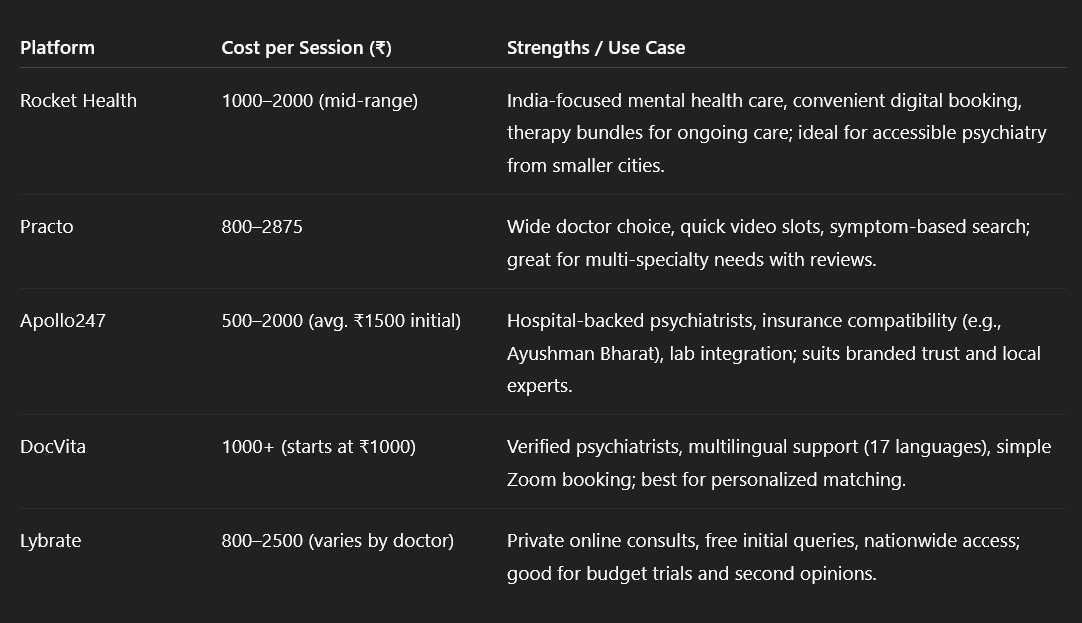
Platform choice aligns with priorities like affordability (Practo/Lybrate for under ₹1000 starts), language options, doctor gender preference, or consistent follow-ups with the same expert. Rocket Health stands out for its mental health-specific focus and subscription discounts on repeat sessions. Always verify current fees on-site, as they depend on the doctor's experience and session length.
5. Schedule a Trial Psychiatrist Appointment Online
Think of your first psychiatrist appointment online as both a clinical assessment and a mutual “fit check.” During that session, notice:
- Do they ask open, non-judgmental questions rather than jumping to conclusions in a few minutes?
- Do they explain what they are doing—why they ask certain questions, what the possible diagnoses might be, and why a particular medication or plan is being considered?
- Do you feel you can say “I’m not comfortable with that” or “Can you explain this more?” without being shut down?
You do not have to commit to long-term treatment with the first person you meet. If the fit doesn’t feel right after one or two sessions, it is acceptable to seek a second opinion or switch to another psychiatrist who may align better with your preferences and communication style.
Top Considerations When Comparing Platforms for Psychiatrist Appointment Online
When you are comparing Rocket Health and other platforms or clinics for a psychiatrist appointment online, go beyond just “price per session.” Look at:
Matching process:Does the platform help pair you with a psychiatrist based on your symptoms, language preference, age, and severity, or do you have to guess and pick manually from a long list?
Continuity of care:Will you be able to see the same psychiatrist for follow-ups, or are you randomly re-assigned each time?
Prescription and follow-up system:
How will you receive prescriptions? Is there an easy way to message the doctor for minor clarifications between appointments (within reasonable limits)?
Support between sessions:Some services offer reminders, symptom trackers, or care coordinators to help you stay on track, which can be incredibly helpful when motivation is low.
Rocket Health, for example, is often chosen by people who want a structured yet accessible way to connect with psychiatrists online in India, with digital-first systems and mental health as the core focus rather than an add-on.

Red Flags to Watch Out for in a Psychiatrist Appointment Online
While most licensed psychiatrists and reputable platforms act ethically, it helps to know what to avoid. Be cautious if you notice:
- No clear qualifications or registration details in the profile.
- A pattern of online complaints about disrespectful behavior or a complete lack of follow-up.
- Unrealistic promises like “100% cure in 1 week” or guaranteed quick fixes for complex conditions.
- Pressure to buy extra packages or services that don’t relate to your actual needs.
- The doctor is prescribing medication without asking about your medical history, other medicines, allergies, or substance use.
Trust your instincts: if you feel consistently unsafe, unheard, or confused, and your concerns are dismissed when you raise them, it is okay to reconsider and consult someone else.
Preparing for Your First Psychiatrist Appointment Online
A little preparation makes your psychiatrist appointment online more productive and less stressful. Before the session, you can:
- Write a symptom summary:
- What you’re experiencing (e.g., panic, rumination, low mood, irritability, sleep issues).
- When it started and how often it occurs.
- Specific triggers if you’ve noticed any (exams, conflict, work stress, hormonal changes, etc.).
- List your current and past medications:
- Psychiatric medications, if any.
- Other regular medicines (thyroid, blood pressure, etc.).
- Any side effects you’ve faced previously?
- Gather relevant history:
- Past diagnoses, hospitalizations, and prior therapy experiences.
- Family history of mental health conditions or substance-use issues if known.
- Note 3–5 key questions you want to ask, such as:
- “What do you think might be going on with me?”
- “What are the options beyond medication?”
- “How long does it usually take to see improvement?”
- “What side effects should I watch for?”
On the technical side, test your internet, camera, and microphone 10–15 minutes before the appointment and choose a relatively private, quiet space where you feel able to speak openly. Having a notebook or notes app open during the consult is also helpful so you can jot down any important points or instructions.
What to Expect During the Session
A typical first psychiatrist appointment online often lasts around 30–60 minutes, depending on the platform and doctor. The psychiatrist will usually:
- Ask about your current symptoms, when they started, and how they impact your daily life.
- Explore your medical, psychiatric, and family history.
- Enquire about sleep, appetite, substance use (alcohol, nicotine, drugs), and any major life events or stressors.
- Assess for safety, including thoughts of self-harm or harm to others, in a sensitive and confidential way.
Toward the end of the session, they may:
- Share possible working diagnoses or what they are considering.
- Suggest a treatment plan, which might include medication, therapy referral, lifestyle changes, or further tests.
- Explain why a certain medicine is recommended, approximate timelines for effect, and initial follow-up schedule.
Feel free to ask for clarification if you don’t understand a term or feel concerned about a particular recommendation—good psychiatrists expect questions and are usually happy to explain.
Making the Most of Follow-Ups After a Psychiatrist Appointment Online
Treatment for mental health conditions is rarely a one-time event; it usually unfolds over weeks and months. To make the most of follow-up appointments:
- Track your symptoms between sessions—quick notes like “sleep better,” “panic less frequent,” or “felt numb this week” can be very valuable.
- Note any side effects or changes you experience after starting or adjusting medication.
- Update your psychiatrist honestly about adherence (if you missed doses, say so; it helps them adjust the plan realistically).
Over time, as you build trust and consistency, the psychiatrist can fine-tune your medications and blend in therapy recommendations or referrals, aiming not just for crisis control but for improved quality of life.
Taking the First Step
Choosing a psychiatrist appointment online can feel like a big, vulnerable decision, especially if it’s your first brush with mental health care. With a clear understanding of what telepsychiatry is, how to evaluate doctors and platforms (including options like Rocket Health), and how to prepare for your sessions, that first step becomes less intimidating and more empowering.
Your role is not to “impress” the psychiatrist or have all the right words; your role is to show up as honestly as you can so they can do their job well. Whether you are dealing with long-term anxiety, a rough depressive episode, or simply confusion about what’s going on, the right psychiatrist appointment online can become a turning point in your story rather than just another task on your to-do list.

.jpg)
.jpg)
.jpg)