
.png)
.png)

Antidepressants stand as a cornerstone in treating depression and anxiety, offering relief to millions. Yet, side effects of antidepressants often spark concern—some fade naturally, others demand swift action. This guide unpacks the spectrum, empowering informed choices.
Common Side Effects of Antidepressants
Side effects of antidepressants hit most people starting treatment. These reactions stem from how medications tweak brain chemicals like serotonin and norepinephrine. The good news? They usually fade as your body adapts.
What Counts as Normal
Normal side effects of antidepressants feel disruptive but pass without harm. Expect them in the first two weeks, then ease off.
- Nausea and stomach upset: Feels like mild food poisoning; hits 20-30% of SSRI users early on.
- Dry mouth and headaches: Common with many types, like sipping cotton balls or a tension band around your skull.
- Drowsiness or fatigue: Especially from sedating options like mirtazapine; nap more at first.
- Weight changes: Slight gain (2-5 kg) over months, tied to appetite shifts in 10-25% of cases.
- Sexual side effects of antidepressants: Reduced libido or trouble with arousal/orgasm affects up to 70% on SSRIs, but eases for some.
These mimic a flu that your system shakes off. Track them in a journal—patterns emerge.
One patient described it as "my body protesting the new tenant in my brain." Spot on. Hydrate, eat light, and give it time.
Why They Occur Early
Side effects of antidepressants peak around week two because receptors overload before balancing out. SSRIs like sertraline flood serotonin pathways, triggering gut and sleep ripples. Tricyclics add anticholinergic haze—blurry vision, constipation.
Drug class matters:
- SSRIs/SNRIs: Insomnia, sweating, dizziness.
- Others: Unique quirks, like vivid dreams on bupropion.
Your genes play a role, too. Fast metabolizers clear drugs quickly, dodging peaks. Patience pays; 80% improve by month one.

Serious Side Effects of Antidepressants
Not all side effects of antidepressants are benign. Rare but real dangers demand quick action. Think of your body waving a red flag.
When to Seek Help Immediately
Call your doctor or 911 if symptoms escalate. Delay risks escalation.
Serotonin Syndrome Signs
This buildup from too much serotonin strikes fast, often with drug mixes.
- High fever over 38°C, shivering.
- Racing heart, high blood pressure.
- Confusion, agitation, hallucinations.
- Muscle rigidity, tremors, seizures.
Affects under 1% but deadly if ignored—hospital stats show quick IV fluids fix most. St. John's wort or tramadol amps risk.
Other Red Flags
Watch these side effects of antidepressants closely:
- Suicidal thoughts: Black box warning for youth under 25; risk jumps 2-4x in first month. Monitor teens extra.
- Hyponatremia: Low sodium hits the elderly—confusion, falls, seizures. 1 in 500 over 65.
- Mania switch: Bipolar risk; euphoria turns frantic.
- Bleeding: GI issues or bruises, worse with NSAIDs.
- Priapism: Painful erection over 4 hours—rare urology emergency.
Withdrawal mimics too: "Brain zaps" (electric jolts), anxiety spikes when skipping doses. Taper never cold turkey.
One overlooked gem: Angle-closure glaucoma in far-sighted folks—blurry vision plus eye pain.
Factors Affecting Side Effects of Antidepressants
Side effects of antidepressants follow patterns shaped by biology, timing, and choices. Understanding these drivers empowers better navigation through treatment.
Individual Risks
Personal factors amplify or mute the side effects of antidepressants. Age, dose, and health status lead the list.
Age Vulnerabilities
Seniors face heightened fall risks from antidepressants, with odds rising 1.57 times overall (SSRIs at OR 2.02) due to dizziness, orthostatic hypotension, sedation, and impaired balance. Heart rhythm issues emerge too—antidepressants link to conduction delays and arrhythmias via ion channel blockade, especially TCAs. The first week post-start poses peak danger, blending drug effects with depression symptoms.
Dosage Impact
"Start low, go slow" cuts early intensity. Low initial doses reduce complications, as full effects lag weeks behind the side effects of antidepressants. No exact "halves woes" stat exists, but titration minimizes overload on receptors.
Polypharmacy Perils
Combining antidepressants with blood thinners spikes bleeding risks—SSRIs like escitalopram with enoxaparin raise major bleeds 18.85-fold via platelet effects. Warfarin pairs show 1.6% heightened GI bleed odds. Multiple medications compound dizziness and sedation.
Health History Hurdles
Liver or kidney impairment slows drug clearance, prolonging exposure to the side effects of antidepressants. Baseline conditions like heart disease worsen rhythm glitches.
Women experience more sexual side effects of antidepressants—desire issues hit 72%, arousal 83%—likely from hormonal interplay with serotonin shifts.
Early Predictors
Side effects of antidepressants by day 4 signal tolerance issues. Early burden (week 1-2) forecasts poorer adherence and non-response, as receptors adapt unevenly. High initial load links to dropout, not just depression persistence.
Treatment Timeline
Side effects of antidepressants unfold predictably, demanding vigilance.
- Week 1: Acute onset—nausea, jitters as body adjusts.
- Week 2: Peak intensity for most.
- Month 1: 50-70% resolve as tolerance builds; persistent ones warrant review.
Anxiety co-occurrence does not intensify side effects of antidepressants, per reviews—early anxiolytics may even aid retention.
Dropout Reality
Real talk: 30-50% quit antidepressants early due to side effects of antidepressants. Surveys show 38% struggle to stop when trying, with 20% facing symptoms over three weeks; three-fourths discontinue within six months. Knowledge shifts outcomes—track weekly, consult promptly.
Management Strategies for Side Effects of Antidepressants
Master the side effects of antidepressants through smart tweaks. No lone wolfing—team with your prescriber.
Doctor-Guided Steps
Evidence backs adjustments over panic quits.
Dose Adjustments
- Lower or switch: Halve dose for nausea; swap SSRI for SNRI.
- Add-ons: Bupropion counters sexual dips in 60%.
- Timing: Night dose for daytime sleepies.
Psychiatrists favor "therapeutic windows"—find yours.
Lifestyle Tips
Hands-on hacks ease side effects of antidepressants:
- Nausea: Ginger tea, small meals; B6 vitamin.
- Dry mouth: Sugar-free gum, water sips hourly.
- Sleep woes: No caffeine post-noon, consistent bedtime.
- Weight/sex: Walk 30 mins daily, pelvic exercises.
- Sweats: Loose cotton clothes, cool showers.
Exercise cuts severity 20-30% via endorphins. Caffeine curbs drowsiness—but not excess.
Avoiding Withdrawal
Sudden stops spark hell: Dizziness, irritability last 1-2 weeks.
- Taper over 2-4 weeks.
- Liquid forms for precision.
- Beta-blockers for heart flutters.
Pro tip: Weekly check-ins first month. Apps log moods, effects seamlessly.
When to Worry: Action Plan
Pull it together. Normal side effects of antidepressants test grit but yield to time. Worry hits with severity, speed, or persistence.
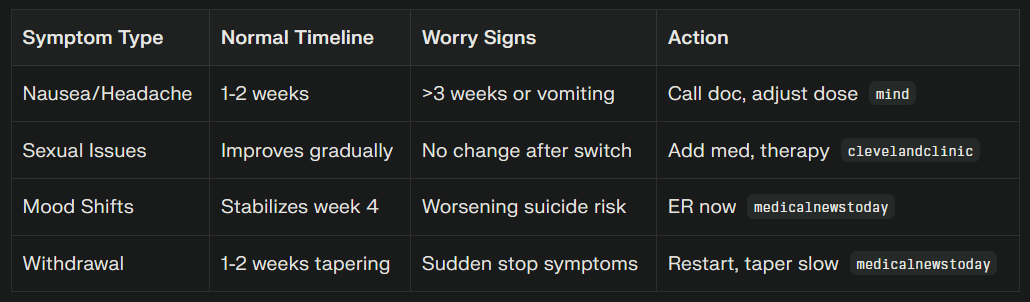
This table arms you. Print it.
Side effects of antidepressants vary—your doc tailors the best. Recent studies confirm drug-specific profiles: Escitalopram has the lightest load, venlafaxine has a heavier. Share the history fully.
The benefits outweigh for millions: Depression kills more via suicide and disability. Stick informed.
Questions? Log them pre-appointment. You're steering recovery.

.jpg)
.jpg)
.jpg)