
.png)
.png)

Imagine waking up one day feeling dizzy, nauseous, and gripped by intense anxiety after deciding to quit your psychiatric medication cold turkey. Abruptly stopping these drugs can lead to withdrawal symptoms ranging from mild discomfort to severe health crises, including relapse of your original condition. This article explores the risks, symptoms, and safer paths forward based on established medical insights.
Disclaimer: This content is for informational purposes only and is not a substitute for professional medical advice. Always consult a qualified healthcare provider before making changes to your medication regimen.
Common Withdrawal Symptoms:
Common withdrawal symptoms from abruptly stopping psychiatric medications can be intense and multifaceted, often starting with physical discomfort before escalating psychologically. These effects stem from sudden shifts in brain chemistry, where drugs like antidepressants or antipsychotics have been stabilizing neurotransmitter levels.
Physical symptoms typically hit first, sometimes within hours.
- Dizziness and vertigo: A spinning sensation that can make standing or walking difficult, linked to blood pressure fluctuations.
- Headaches: Throbbing or migraine-like pain, often worsening with movement.
- Nausea and flu-like aches: Vomiting, chills, muscle soreness, and fatigue mimicking a bad virus.
- Sweating and tremors: Excessive perspiration, shaky hands, or full-body quivers.
- Brain zaps: Sudden, electric-shock feelings in the head or body, especially common with SSRIs—described as brief jolts like crossing wires in the brain.
Psychological symptoms layer on top, amplifying distress and risking relapse.
These can onset in days and persist variably based on factors like dosage, treatment length, and personal biology.
- Heightened anxiety: Overwhelming worry or panic that feels unmanageable.
- Irritability and rage: Short fuse, snapping at minor triggers.
- Mood swings: Rapid shifts from euphoria to despair.
- Insomnia: Trouble falling asleep or vivid nightmares disrupting rest.
- Severe cases: Panic attacks with chest pain or suicidal ideation, demanding immediate medical help.
Risks by Medication Type
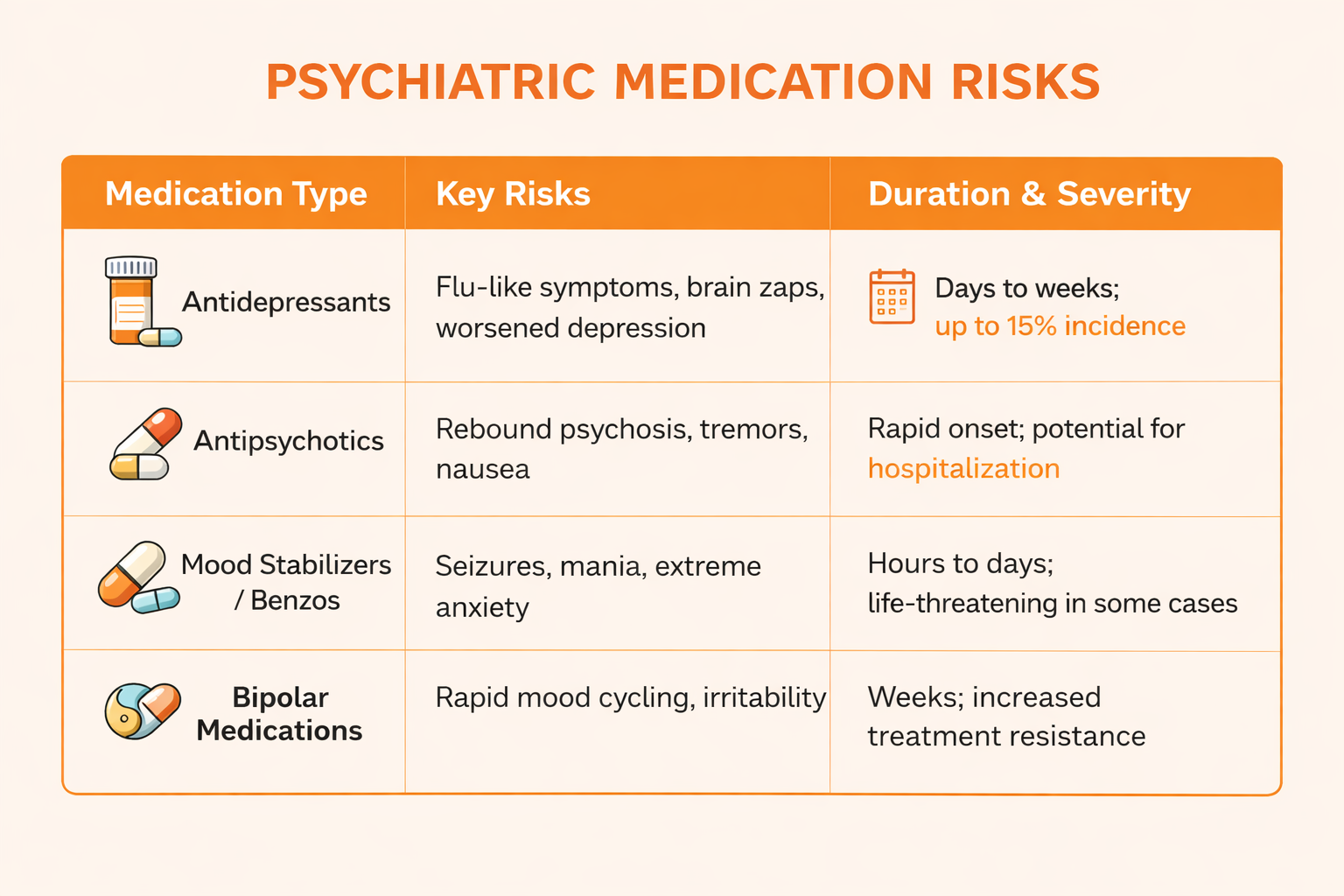
Withdrawal is often mistaken for relapse, complicating diagnosis and care.
Why Sudden Stopping is Dangerous:
Sudden stopping of psychiatric medications poses serious dangers because these drugs fundamentally reshape brain chemistry over time. Neurotransmitters like serotonin, dopamine, and GABA, which regulate mood, sleep, and stress, adapt to the medication's presence; abrupt removal causes a chaotic rebound where the brain overcompensates, leading to amplified symptoms far worse than before starting treatment.
Mechanisms Behind the Danger
This disruption isn't just temporary—it's a physiological storm.
- Neurotransmitter imbalance: Sudden drops in serotonin from SSRIs trigger "discontinuation syndrome," with cells firing erratically.
- Rebound hypersensitivity: Dopamine blockers (antipsychotics) cause a surge in activity, mimicking psychosis or mania.
- Dependency buildup: Long-term use alters receptor sensitivity, making natural regulation sluggish upon cessation.
Long-term fallout compounds the issue, with studies indicating prolonged symptoms in up to 15% of cases, elevated relapse rates within months, and even treatment resistance where meds lose effectiveness later.
Safe Alternatives and Prevention
The key to minimizing harm lies in structured, supervised strategies rather than going it alone.
Gradual Tapering: Slowly reduce doses—e.g., 10-25% every 1-4 weeks, customized by drug half-life—to allow the brain to readjust gently, slashing symptom intensity by over 50% in many cases.
Professional Monitoring: Regular check-ins with a psychiatrist track subtle changes via bloodwork, mood scales, or apps; Rocket Health provides virtual consultations from Guwahati, offering real-time adjustments without travel.
Support strategies amplify success, creating a holistic buffer.
- Therapy integration: CBT or mindfulness reduces psychological triggers during taper.
- Exercise routines: 30 minutes daily boosts endorphins, countering fatigue and mood dips.
- Nutrition focus: Omega-3s, B-vitamins, and hydration stabilize nerve function.
- Sleep hygiene: Consistent bedtime rituals prevent insomnia spirals.
Never attempt changes solo—contact Rocket Health psychiatrists today for tailored, evidence-based tapering plans that prioritize your safety.
The Bottom Line:
Abruptly stopping psychiatric medication can unleash a cascade of withdrawal symptoms, from debilitating physical jolts to psychological turmoil, while heightening risks of relapse and long-term brain chemistry disruptions. The evidence is clear: sudden cessation amplifies dangers that gradual, supervised tapering can largely prevent, safeguarding both immediate well-being and future treatment efficacy.
Prioritize your health by never going it alone—consult certified psychiatrists for personalized plans that minimize risks and support recovery.
Reach out to Rocket Health today for virtual consultations with certified psychiatrists to guide you safely through any medication changes.

.jpg)
.jpg)
.jpg)