

.png)
.jpg)
Grudges—those lingering feelings of unresolved anger, bitterness, or resentment—are something almost everyone has experienced at some point. But what is a grudge, really? Is it just hurt feelings we carry with us, or does it go deeper into our psychology? Holding on to resentment may seem harmless at first, but over time, grudges can shape our relationships, our mental health, and even our physical well-being.
In this article, we’re going to dive deep into grudges: what they are, why we hold them, how they affect us, and what we can actually do about them. Whether you’re reflecting on your own patterns or trying to better understand others, this guide provides an in-depth exploration that’s both approachable and grounded in psychological insight.
What is a Grudge?
A grudge is a persistent feeling of resentment or ill will toward someone who has wronged us, whether intentionally or unintentionally. Unlike fleeting anger, grudges do not fade quickly. Instead, they linger in our minds and hearts, often resurfacing when triggered, or even shaping how we perceive future events.
Psychologists often describe grudges as unresolved anger paired with an unwillingness (or inability) to forgive. Unlike healthy anger, which can motivate us to set boundaries or seek resolution, grudges keep us stuck in the past, replaying events over and over without true closure.
Core Elements of a Grudge
- Perceived Wrongdoing: Something happens that feels unjust, offensive, or deeply hurtful.
- Emotional Persistence: The negative feelings don’t fade with time and remain strong.
- Resentment and Retaliation: A desire for acknowledgement, revenge, or justice often fuels the grudge.
- Unforgiveness: The inability or unwillingness to move forward, forgive, or release the pain.
The Psychology Behind Holding Grudges
Holding a grudge is not simply about refusing to let go; it is a complex psychological response deeply rooted in our emotional patterns and evolved survival mechanisms. Grudges often emerge after an experience perceived as unfair, hurtful, or betraying, with emotional reactions that are powerful enough to linger for years. These responses are tied to our brains' automatic processes, especially in relation to past betrayals or threatening events.
The limbic system, including the amygdala, plays a central role in this process. When an individual feels wronged, the amygdala triggers heightened emotional centres responsible for anger, fear, and disgust. This survival mechanism, originally meant to protect us against threats, is activated, keeping negative memories vivid and prompting a cycle of rumination that prolongs emotional distress.
Why Do We Hold Grudges?
Evolutionary Roots & Negativity Bias
Human beings are wired to remember negative experiences more vividly than positive ones, a phenomenon termed "negativity bias." This bias allowed our ancestors to remember threats more effectively, enhancing their chance of survival by avoiding similar dangers in the future.
Negativity bias causes individuals to:
- Recall insults or traumatic experiences more strongly than praise
- React powerfully to negative events, making them more salient
- Focus on past hurts and dwell on them, amplifying their impact on behaviour and decision-making.
For example, a slight at work—such as being excluded from a group or receiving negative feedback—can stick in one's mind and overshadow many positive experiences throughout the day.
Emotional and Biological Mechanisms
The experience of holding a grudge is also emotionally satisfying for some, as it offers a sense of control, power, and validation. When a person is wronged, the urge to regain control or even punish the perceived offender can be emotionally fulfilling, driven by dopamine-related processes in the brain.
Additionally, holding onto a grudge can be a way to self-protect—avoiding vulnerability, seeking justice, or asserting personal boundaries when trust has been violated.
The Role of Ego and Self-Identity
Grudges often threaten one’s ego and sense of identity. When a betrayal targets values such as trust, dignity, or loyalty, releasing the grudge can feel like minimising the pain endured. In many situations, maintaining a grudge seems to sustain a sense of justice or acknowledgement for what happened. Individuals may feel empowerment or validation by holding onto their resentment, believing it safeguards their self-worth and protects against future harm.
Common Triggers of Grudges
Grudge-holding is frequently sparked by relational and social contexts, including:
- Betrayal by a close friend or partner: The closer the relationship, the deeper the emotional wound, making forgiveness more difficult and grudges more likely.
- Workplace conflicts or unfair treatment: Professional environments often breed grudges, stemming from perceived injustices, exclusion, or misunderstandings over assigned tasks.
- Family disputes that go unresolved: Long-standing family conflicts, often compounded over years, tend to result in persistent grudges.
- Broken promises or disloyalty: Unmet expectations in both personal and professional relationships increase vulnerability to resentment.
- Social humiliation or insults: Public embarrassment or disrespect, especially when witnessed by others, frequently leads to the formation of grudges.
Effects of Holding a Grudge
Grudges exert a profound influence on mental, physical, and social well-being. While the initial emotional pain may seem like the biggest cost, unresolved resentment ripples into almost every aspect of life.
Mental Health Consequences
- Increased Anxiety: Continually reliving negative experiences maintains high levels of stress, triggering persistent worry, insecurity, and nervousness.
- Depression: The inability to forgive, process, or resolve hurt can deepen feelings of hopelessness, sadness, and rumination. Fixating on past wounds perpetuates depressive episodes and emotional numbness.
- Obsessive Thought Patterns: Grudge-holding is closely linked to rumination, where individuals replay events repeatedly, which increases emotional distress and can impair memory and perception of reality.
Physical Health Consequences
Grudges repeatedly trigger the body's stress response system, flooding it with cortisol and other hormones. Over time, this can cause:
- High Blood Pressure: Chronic anger and resentment raise blood pressure and strain cardiovascular health.
- Weakened Immune Response: Persistent stress suppresses immunity, making the body more vulnerable to infections and diseases.
- Sleep Disturbances: Anxiety and obsessive thoughts interfere with sleep patterns, sometimes leading to insomnia.
- Greater Risk of Disease: Long-term grudge-holding has been linked to greater inflammation, heart disease, and, according to recent research, risks for diabetes, arthritis, and even cancer.
Impact on Relationships
Grudges act as silent barriers in families, friendships, and romantic partnerships. Even if people continue engaging superficially, bitterness lingers below the surface—making true empathy and trust impossible.
- Estrangement and Isolation: Resentment can cause detachment from loved ones, ruin friendships, and make socialising less frequent and less meaningful.
- Toxic Social Cycles: Others may recoil from people who cannot forgive, further fueling loneliness and social withdrawal.
- Limited Closeness: Unspoken bitterness prevents deeper connection and healing, keeping relationships shallow and guarded.
How Grudges Differ from Healthy Anger
Not all negative emotions are the same. Healthy anger motivates action, sets boundaries, and seeks solutions. Grudges, however, act as long-lasting emotional weights with negative outcomes.
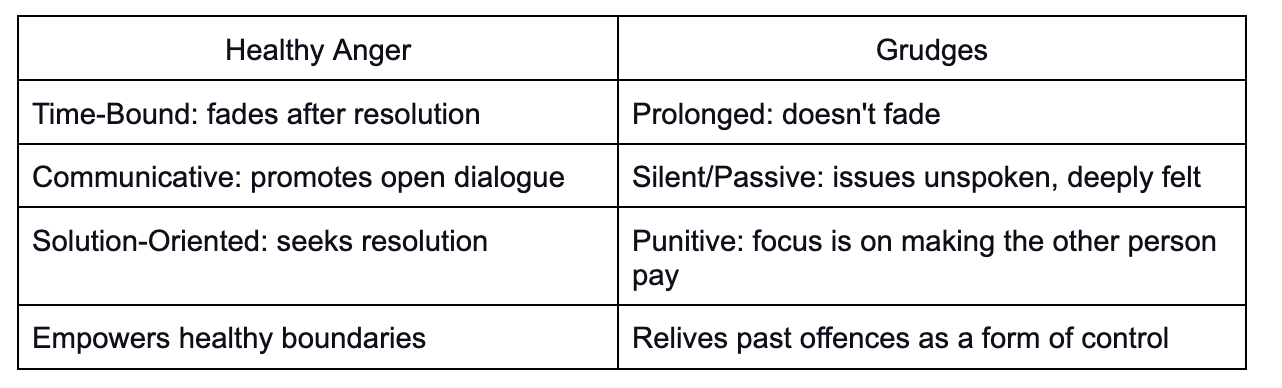
Healthy anger emerges, is expressed constructively, and subsides; it protects boundaries and can lead to growth.
Grudges are cemented by bitterness or unhealed hurt and become internalised over time, creating a chronic emotional and relational burden.
How to Let Go of a Grudge
Step 1: Acknowledge the Pain
The first essential step is recognising the reality and intensity of the hurt you experienced. Holding a grudge is often rooted in genuine pain, betrayal, or injustice, so denying or minimising this can prolong resentment and emotional distress. Acknowledge your feelings fully—anger, sadness, disappointment, or betrayal—without judgment. This acknowledgement helps in clarifying what caused the grudge and why it still weighs on you.
Recognising your emotions enables you to take ownership of your experience, which is crucial for moving forward instead of suppressing what hurts.
Step 2: Practice Empathy
Empathy involves trying to see the situation from the perspective of the person who hurt you, not to excuse their behaviour but to understand it. Sometimes, understanding the other person’s context, struggles, or intentions can lessen the emotional charge behind the grudge and open the door to compassion.
Psychological research shows that empathy activates parts of the brain responsible for perspective-taking and emotional regulation, which decreases anger and bitterness. This cognitive shift can help in reducing the intensity of negative feelings attached to the grudge.
Step 3: Set Boundaries
It is essential to understand that forgiveness does not mean restoring full trust or reconciliation with the person who caused the harm. Setting healthy boundaries protects you from repeated harm and establishes what behaviour is acceptable moving forward.
Boundaries can be physical, emotional, or social—like limiting contact, refusing to rehash old issues, or making clear your expectations for respectful treatment.
Creating clear boundaries ensures that forgiveness is a tool for your peace, not a pathway back to vulnerability or toxicity.
Step 4: Use Stress-Relief Techniques
Because grudges feed the body’s stress response, managing this stress is vital to letting go. Mindfulness practices, including meditation and deep breathing, help calm the nervous system and interrupt the cycle of rumination. Journaling can support processing feelings by externalising your thoughts, making them easier to examine and release.
Therapy also offers professional guidance to explore the roots of the grudge, develop coping skills, and rebuild emotional resilience. Regular exercise and adequate sleep complement these efforts by improving overall physical and mental health, which aids emotional recovery.
Step 5: Focus on Self-Compassion
Finally, a shift toward self-compassion is key in releasing grudges. Instead of constantly reliving how wronged you were, try to treat yourself kindly, understanding that everyone makes mistakes—both you and the other person.
Self-compassion involves being patient with yourself as you heal and embracing your worth beyond the pain that was inflicted. This inward focus also promotes personal growth and emotional freedom, reducing the power that the grudge holds over your well-being.
Conclusion: Moving Beyond Grudges
So, what is a grudge? At its core, it is a lingering weight of resentment that ties us to the past. While born from real hurt, grudges often prevent us from moving forward. The key lies not in forgetting the wrong but in releasing its hold on us. Forgiveness—whether toward others or ourselves—is one of the most powerful steps toward emotional freedom.
Choosing forgiveness doesn’t mean condoning harm. It means choosing peace over perpetual conflict. By learning how grudges work, how they affect us, and how to release them, we can live healthier, stronger, and more connected lives.

.jpg)
.jpg)
.jpg)