
.png)
.png)

Retrograde amnesia might seem confusing at first, but with some explanation, it becomes easier to understand how memories from before a traumatic event can fade. In this article, we’ll explain what retrograde amnesia is, how it’s different from other memory problems, and what you can expect when it comes to diagnosis, treatment, and daily life.
What is retrograde amnesia?
Retrograde amnesia means losing memories and experiences from before a brain injury or traumatic event. These memory gaps can be short or last for years. People with retrograde amnesia are usually still able to make new memories after the event, which is different from anterograde amnesia, where making new memories is difficult. The way memory loss appears depends on which parts of the brain are affected and how serious the injury is.
How Retrograde Amnesia Develops and Its Common Symptoms
Understanding how retrograde amnesia develops helps demystify why some people lose personal memories while still forming new ones. Below is a clear, structured look at the development process and the typical signs you might observe.
How memories are stored in the brain
Memories are not kept in just one place in the brain. Instead, they depend on a network of brain areas that work together. The hippocampus, found deep in the temporal lobe, is important for making new personal memories. Other nearby areas, like the parahippocampal gyrus, entorhinal cortex, prefrontal cortex, and other parts of the brain, help add details like context, identity, feelings, and time.
If this network is damaged by an injury, the way memory loss appears depends on which areas are hurt and how long the problem lasts. In retrograde amnesia, older memories are often affected more than newer ones, but the exact pattern is different for each person.
Mechanisms that contribute to retrograde amnesia
- Gradual retrograde decay: After injury, there can be a gradual weakening of existing memory traces. Some memories fade first, often those that are less frequently recalled or less emotionally salient.
- Injury to memory consolidation pathways: If the brain’s pathways that stabilize memories over time are damaged, recently formed memories may be more vulnerable than distant ones, creating a gradient of memory loss from recent to remote events.
- Disruption of hippocampal–cortical networks: The hippocampus replays and stabilises memories with cortical areas during sleep and rest. Damage to these networks can interrupt the reactivation necessary to preserve older memories.
- Temporal gradients and reminiscence effects: People may show strong retention for certain life periods (e.g., childhood) and poorer recall for mid-life events, reflecting how memories are encoded and stored across the lifespan.
Pattern of memory loss: what tends to be affected first
There isn’t a universal rule, but several common patterns emerge:
- Early memories from recent years before the injury are often most vulnerable.
- Extremely salient life events (weddings, births, trauma) may be retained or resurfaced more readily than mundane details.
- Highly emotionally charged memories can be either preserved due to strong encoding or resurfaced with vivid detail as they emerge.
Remember, every case is unique. The exact set of memories affected depends on the specific brain regions injured and the severity of the damage.
Recovery trajectories: partial, complete, or lasting gaps
Recovery after retrograde amnesia can follow several paths:
- Partial recovery: Some memories regain accessibility over weeks to months as healing occurs and neural connections strengthen.
- Complete recovery: In rare cases, most or all older memories return, especially with targeted rehabilitation and consistent cognitive engagement.
- Persistent gaps: For some individuals, certain memories remain inaccessible for extended periods or permanently, particularly if the underlying brain injury is extensive.
Factors that influence recovery include the injury’s location and extent, overall brain health, age, sleep quality, and engagement in cognitive and memory-retraining activities.
Distinguishing retrograde amnesia from related conditions
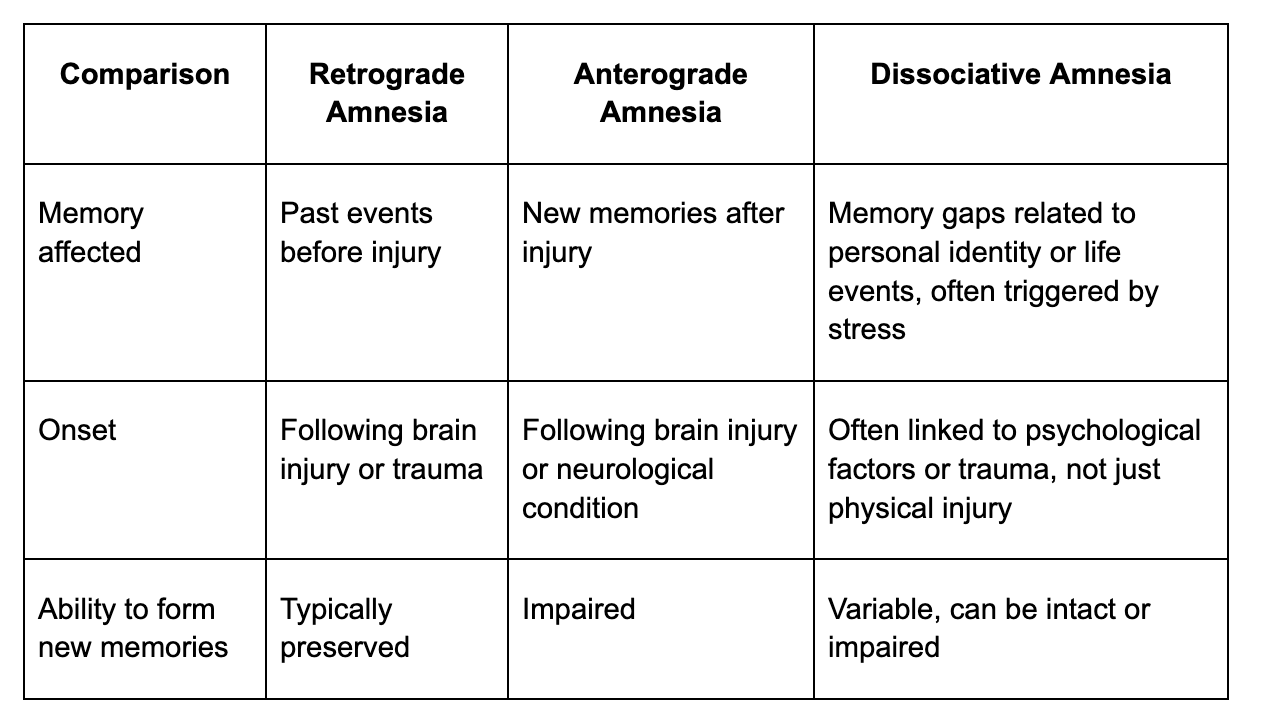
Understanding these distinctions helps guide expectations for recovery and informs conversations with healthcare providers.
Impact on Identity and Relationships:
Memory loss that predates an injury strikes at the heart of identity. When autobiographical memories fade or disappear, people can feel untethered from who they were—the roles they played, the people they loved, and the milestones that defined them. It’s not just about facts; it’s about continuity of self. The emotional weight is often heavier than the clinical details, because memory loss reshapes personal narrative and trust within relationships.
In relationships, this can create a delicate tension between wanting to reconnect with the past and needing to live in the present. Loved ones may wrestle with questions of authenticity and reliability, while the person affected may grapple with guilt, frustration, or grief over lost chapters of their life. The most human dynamic I see is the renegotiation of roles: partners, children, and friends become co-authors of an evolving story, honoring what’s known now and exploring what might be rediscovered.
A compassionate approach—without overthinking recovery timelines—emphasizes patient-centered communication, patience, and shared meaning in the present. Even when memories don’t return, people can rebuild identity through current values, meaningful activities, and authentic connections. Resilience emerges from small, tangible moments: a laugh with a friend, a favorite hobby re-engaged, or a new quality of self that honors both the preserved parts of memory and the lived experiences of today.
How clinicians evaluate retrograde amnesia
A careful evaluation combines history, testing, and imaging:
- Clinical interview: Documents pre-injury life, the incident details, and the pattern of memory loss.
- Neuropsychological testing: Assesses autobiographical memory, memory for general information, and executive functions to map which memories are affected.
- Imaging studies: MRI or CT scans help identify structural injuries and evaluate potential causes like concussion, stroke, or tumor.
- Rule-outs: Clinicians consider other explanations for memory loss, such as dissociative disorders, delirium, or dementia, to avoid misdiagnosis.
Therapeutic approaches and supportive care
There is no single cure for retrograde amnesia, but several strategies support recovery and daily functioning:
- Cognitive rehabilitation: Structured exercises that target memory retrieval strategies, organization, and compensatory techniques.
- Memory aids: Diary keeping, photo albums, calendars, and labeled items can help anchor daily life while older memories recover.
- Reminiscence therapy: Guided discussions about past experiences can stimulate recall and provide emotional grounding.
- Emotion-focused support: Counseling helps manage anxiety, identity concerns, and relationship strains that may accompany memory loss.
- Family education: A supportive home environment and realistic expectations improve outcomes.
Active participation in therapy and a cooperative care team often correlate with better results.
Living with retrograde amnesia: practical tips
- Keep a consistent routine to reduce confusion and stress.
- Use memory prompts in daily life: calendars, notes, and reminders.
- Engage in memory-stimulating activities: reading, storytelling, crosswords, and discussing past events.
- Maintain social connections: conversation and shared reminiscence can aid retrieval and emotional well-being.
- Prioritize sleep and physical activity: both support brain health and memory processes.
Conclusion
Memory changes that precede an injury can challenge a person’s sense of self and reshape how they navigate relationships. The path forward is not about rushing memories back but about rebuilding a coherent, meaningful life in the present. With patient-centered support, individuals can cultivate identity through current values, purposeful activities, and authentic connections.
RocketHealth and online psychiatry can play a meaningful role in this journey. Through convenient virtual consultations, you can access compassionate, evidence-based care that respects your schedule and privacy. Clinicians can help address mood and stress related to memory changes, coordinate cognitive rehabilitation, and connect you with a multidisciplinary team as needed. Telepsychiatry follow-ups support medication management, symptom monitoring, and ongoing emotional support, all from the comfort of home.
Key ways RocketHealth can help:
- Collaborative care planning with psychiatrists, psychologists, and therapists to address emotional well-being, grief, and identity concerns.
- Telepsychiatry follow-ups to monitor symptoms, adjust treatment, and support sleep, anxiety, and mood management.
- Access to cognitive rehabilitation and reminiscence strategies guided by memory-aware clinicians who understand daily functioning.
- Family involvement support, education, and practical conversation guides to foster constructive communication at home.

.jpg)
.jpg)
.jpg)